
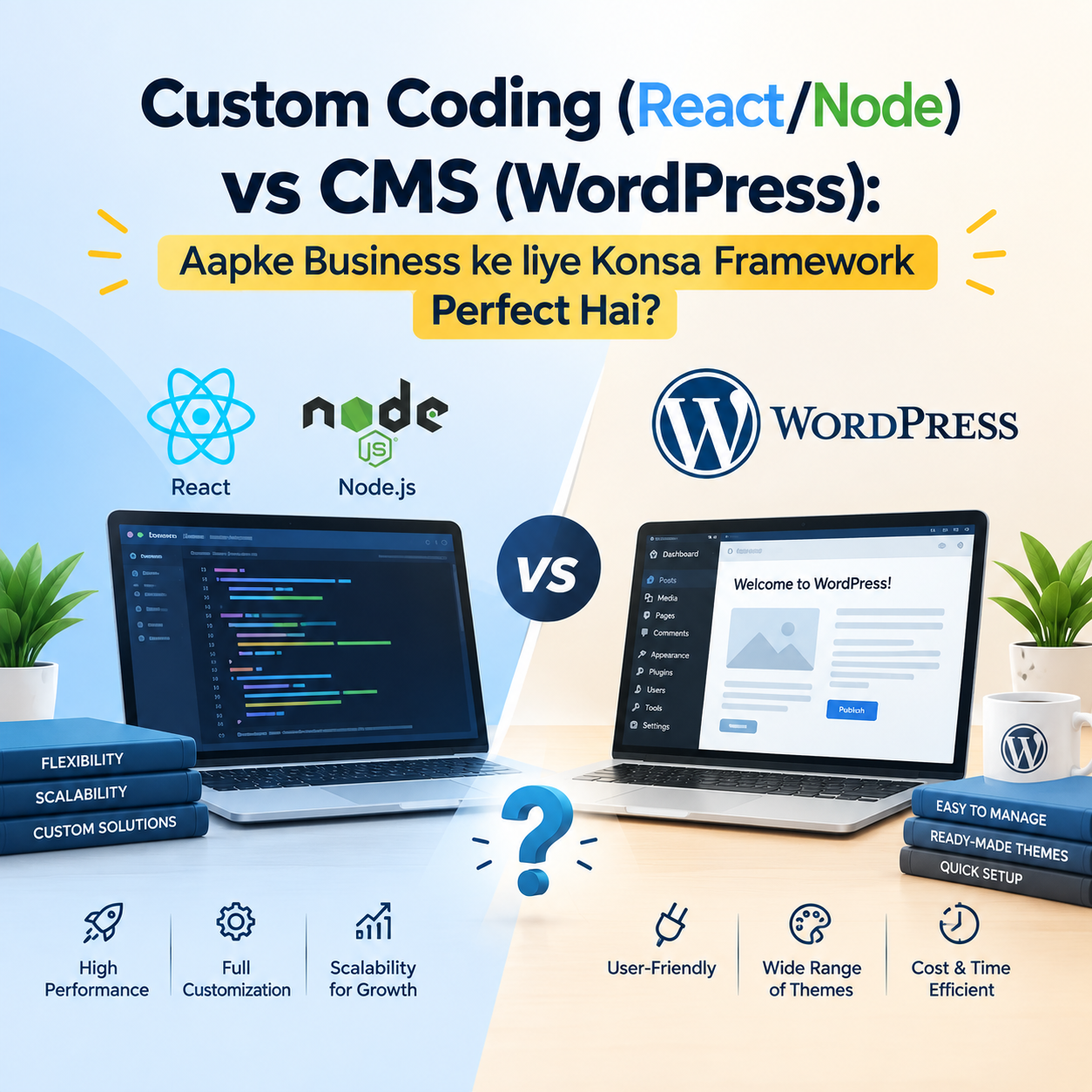
Choosing the technical foundation for your website is one of the most consequential decisions a business owner or product team will make. A poor choice can lock you into restrictive technical debt, force expensive rebuilds, or saddle your operational team with complex software workflows they cannot manage. The debate between a custom website vs wordpress comes down to balancing technical control against speed to market.
Modern content management systems like WordPress power over 40% of the web, providing ready-to-use publishing interfaces and massive plugin ecosystems. Meanwhile, bespoke applications built with modern frontend frameworks and modular backends offer complete architectural freedom, tailored user interfaces, and superior performance. Evaluating a custom website vs wordpress requires assessing your specific workflow requirements, internal technical capabilities, and multi-year product roadmap.
Whether you need a high-velocity editorial portal, a custom software dashboard, or a scalable e-commerce storefront, analyzing wordpress vs custom coding helps you select the exact tech stack your business needs to grow.
Core Architectural Comparison
Before committing capital to development, compare the fundamental trade-offs between custom builds and content management systems:
Platform Architecture Models:
• CMS (WordPress): Monolithic Core ➔ Theme/Plugin Layers ➔ Visual Admin Dashboard ➔ Rapid Deployment
• Custom Stack (React/Node): Decoupled Frontend/Backend ➔ Tailored API Endpoints ➔ Clean Native Codebase
The Power and Limitations of WordPress for Businesses
WordPress remains the most popular website framework for good reason. For editorial sites, marketing landing pages, and straightforward business profiles, choosing the best cms for business operations simplifies daily publishing.
CMS Lifecycle:
Pre-Built Database Schema ➔ Theme Customization ➔ Plugin Integration ➔ Visual Admin Management
1. Rapid Deployment and Content Management
The greatest advantage of a content management system is content autonomy. Non-technical marketing teams can create landing pages, optimize metadata, and publish articles without writing a single line of code.
2. Plugins and Cost Efficiency
Evaluating website development cost shows that WordPress drastically reduces initial design and engineering hours.
The extensive plugin ecosystem lets you add contact forms, membership logic, and payment gateways with minimal custom programming.
When analyzing cms vs custom build options for standard marketing sites, WordPress offers unmatched speed to market.
However, relying too heavily on bloated third-party plugins can drag down website loading speed comparison scores and introduce security vulnerabilities if updates are neglected.
When to Choose Custom Web Development (React & Node.js)
Bespoke web applications shine when your product requires complex logic, specialized workflows, or high-concurrency performance that standard CMS databases cannot handle efficiently.
1. High-Performance Frontend & Scalability
Frameworks like React and Next.js generate lightning-fast user interfaces. Custom builds eliminate unused code, ensuring top-tier Core Web Vitals performance.
Modern custom web development benefits include total layout freedom, smooth client-side page transitions, and bespoke UI component systems.
A decoupled architecture provides superior website scalability comparison metrics, allowing applications to serve millions of API requests without database bottlenecks.
Selecting specialized frontend vs backend frameworks allows developers to isolate frontend rendering from sensitive backend database operations.
2. Bespoke User Experiences and Tailored Logic
If you are designing proprietary client portals, interactive calculators, or SaaS platforms, a basic CMS quickly becomes a restrictive bottleneck. Investing in a custom website design gives your engineering team full control over user authentication, custom database schemas, and microservice integrations.
Understanding custom web development benefits is crucial when your digital platform serves as the core product rather than just a digital brochure.
E-Commerce Platforms: WordPress (WooCommerce) vs Custom Solutions
Choosing an ecommerce website platform choice requires looking closely at order volumes, product customization needs, and checkout complexity.
E-Commerce Selection Guide:
• Standard Inventory (< 5,000 SKUs) ➔ WordPress + WooCommerce / Shopify
• Complex Dynamic Pricing & Global Scale ➔ Custom Headless Architecture (React + Custom Backend)
Catalog Management: Standard retail catalogs run smoothly on CMS platforms, keeping website maintenance costs low for growing brands.
Complex Transactions: Platforms requiring dynamic B2B pricing tiers, custom product configurators, or international warehouse integrations run better on a web development framework comparison tailored for custom logic.
Application Growth: As transaction volumes scale, planning a comprehensive web app development guide prevents checkout latency during high-traffic sales events.
Making the Technical Decision
To select the right architecture for your organization, review these baseline scenarios:
Select WordPress When: You need a content-heavy publication, an agency portfolio, or a standard corporate website managed by a non-technical marketing team with a controlled budget.
Select Custom Code (React/Node) When: You are building web applications, client dashboards, subscription platforms, or high-performance digital tools that demand distinct database architecture and custom UI workflows.
Evaluating a custom website vs wordpress through this operational lens ensures your technology stack actively supports your commercial goals.
Technical Implementation Checklist
Evaluated team capabilities against the wordpress vs custom coding framework.
Calculated total initial website development cost versus multi-year running costs.
Assessed performance benchmarks in a website loading speed comparison.
Outlined long-term maintenance requirements to budget for website maintenance costs.
Analyzed the target transaction workflows to finalize your e-commerce website platform choice.
Decided between the best CMS for a business approach and a dedicated custom website design.
Frequently Asked Questions (FAQs)
1. Why is the custom website vs wordpress decision critical for business growth?
Choosing the wrong stack leads to high rebuild costs or slow day-to-day operations. A marketing site stuck on a complex custom framework slows down non-technical team members, while an interactive SaaS product built on a CMS will face performance and security constraints.
2. How does wordpress vs custom coding impact overall website maintenance cost?
WordPress maintenance involves regular plugin, theme, and core software updates, which can occasionally cause plugin compatibility conflicts. Custom code requires dedicated developer resources for hosting configurations, dependency updates, and server monitoring, but avoids unpredictable third-party plugin breakages.
3. What are the key custom web development benefits for scaling businesses?
Custom web development provides tailored user experiences, optimized page rendering speeds, complete ownership of source code, and custom database designs that scale smoothly under heavy server loads.
4. When comparing cms vs custom build, which option offers better security?
A custom build generally has a smaller attack surface because it does not rely on public third-party plugins. WordPress can be equally secure, but it requires diligent maintenance, security plugins, and regular updates to prevent vulnerabilities in outdated add-ons.
5. How do frontend vs backend frameworks work together in custom development?
In a modern decoupled setup, frontend frameworks (like React or Vue) handle what users see and interact with in their browser, while backend frameworks (like Node.js, Express, or Django) handle data processing, user authentication, and database queries via secure APIs.
6. Which ecommerce website platform choice is best for small businesses?
For small businesses selling standard products with straightforward shipping rules, WordPress with WooCommerce or turnkey platforms like Shopify are usually best because they minimize setup time and development costs.